GPT Image 2AI 提示词
Japanese Rocket Engineering Infographic — Sora 2 Prompt
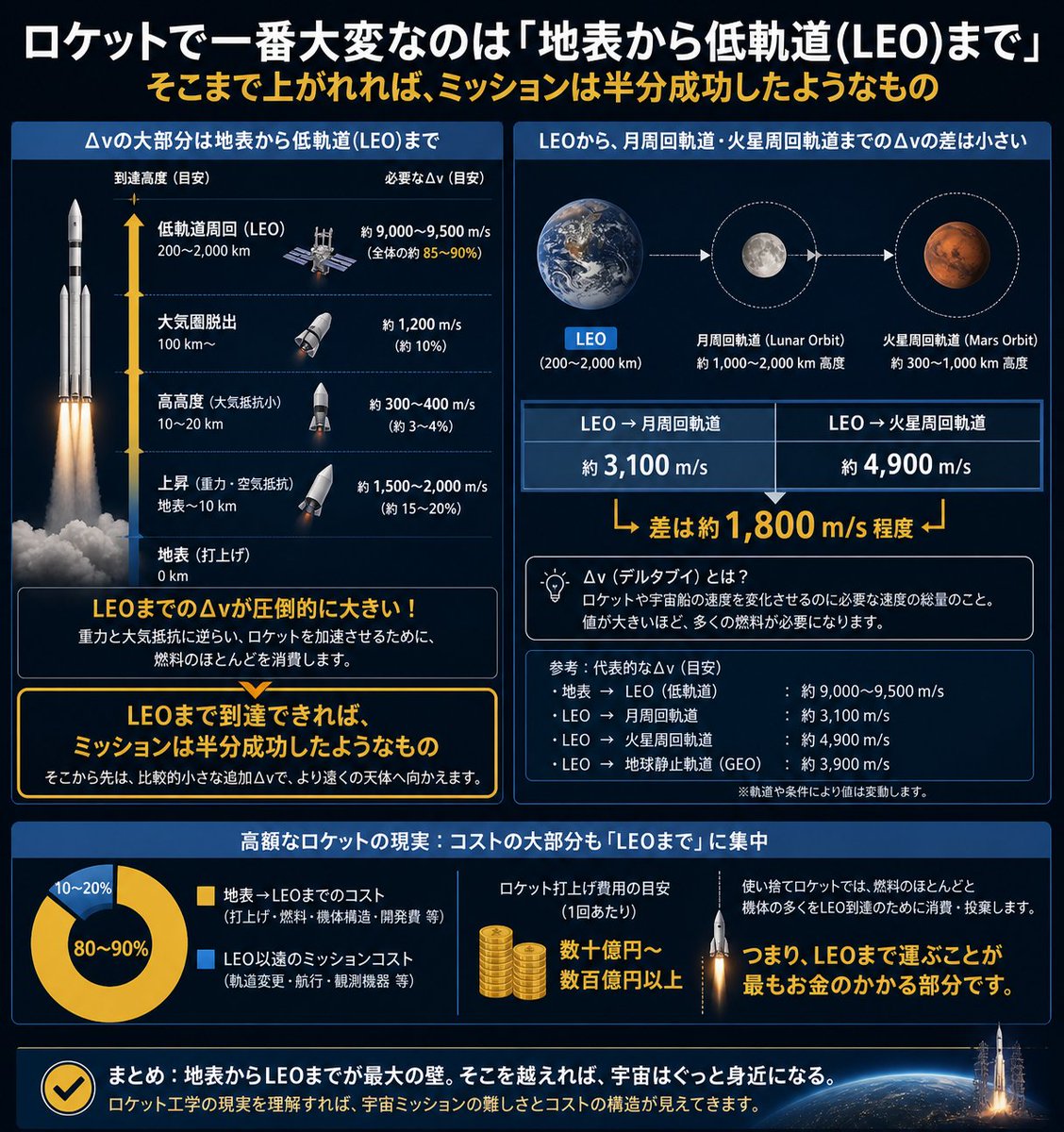
Generate a detailed Japanese-language infographic explaining why reaching Low Earth Orbit (LEO) is the hardest and costliest step in a rocket mission.
提示词 · EN
type
日语火箭工程信息图format
单张正方形教育信息图,1:1 长宽比theme
基于基础火箭工程学,解释火箭任务中最困难的部分是从地表抵达近地轨道language
日语visual style
深海军蓝太空科技风信息图,配以亮蓝色章节标题、黄橙色高亮、白色日语字体、简洁的工程图解、逼真的 3D 火箭与行星渲染,高对比度,精致的社交媒体科普设计headline
{argument name="headline text" default="火箭发射最难的一步:从地表到近地轨道(LEO)"}subtitle
{argument name="subtitle text" default="只要能抵达那里,任务就相当于成功了一半"}canvas
background
深海军蓝渐变,带有细微的网格线和太空氛围光晕border
整张信息图周围有细蓝色边框layout
顶部标题,上方两个大面板并排,中间一个宽成本面板,底部一个总结横幅layout
sections count
5sections
item 1
title
大部分 Δv 消耗在从地表到近地轨道(LEO)的过程中position
左上content type
垂直高度与 delta-v 对比图表,配火箭发射插图main visual
最左侧为大型黑白重型火箭升空,带有明亮的橙色火焰和烟云chart columns
item 1
到达高度(参考)item 2
所需 Δv(参考)altitude stages count
4altitude stages
item 1
label
近地轨道(LEO)altitude
200〜2,000 kmdelta v
约 9,000〜9,500 m/s(总量的约 85〜90%)icon
小型卫星item 2
label
脱离大气层altitude
100 km 以上delta v
约 1,200 m/s(约 10%)icon
小型倾斜火箭item 3
label
高空(大气阻力小)altitude
10〜20 kmdelta v
约 300〜400 m/s(约 3〜4%)icon
小型火箭item 4
label
上升(重力与空气阻力)altitude
地表〜10 kmdelta v
约 1,500〜2,000 m/s(约 15〜20%)icon
小型火箭机头向上callouts count
2callouts
item 1
text
抵达 LEO 所需的 Δv 极其巨大!style
深色边框内的黄色标题item 2
text
只要能抵达 LEO,任务就相当于成功了一半style
带有向下箭头的橙色大边框item 2
title
从 LEO 到月球轨道或火星轨道的 Δv 差值较小position
右上content type
太空轨道对比图与 delta-v 表格celestial bodies count
3celestial bodies
item 1
label
LEOdescription
带有蓝色大气的地球,虚线圆形轨道,标注 200〜2,000 kmitem 2
label
月球轨道(Lunar Orbit)description
虚线轨道上的灰色月球,标注约 1,000〜2,000 km 高度item 3
label
火星轨道(Mars Orbit)description
虚线轨道上的橙色火星,标注约 300〜1,000 km 高度trajectory arrows count
2trajectory arrows
item 1
地球/LEO 到月球item 2
月球到火星comparison boxes count
2comparison boxes
item 1
label
LEO → 月球轨道value
约 3,100 m/sitem 2
label
LEO → 火星轨道value
约 4,900 m/shighlight
差值仅约 1,800 m/sdefinition box
title
什么是 Δv(Delta-v)?text
指改变火箭或航天器速度所需的总速度量。数值越大,所需的燃料就越多。icon
灯泡reference list count
4reference list
item 1
地表 → LEO(近地轨道): 约 9,000〜9,500 m/sitem 2
LEO → 月球轨道: 约 3,100 m/sitem 3
LEO → 火星轨道: 约 4,900 m/sitem 4
LEO → 地球静止轨道(GEO): 约 3,900 m/sfootnote
※数值会因燃油效率和条件而异。item 3
title
昂贵火箭的现实:大部分成本也集中在“抵达 LEO”position
中间全宽content type
成本构成面板subcomponents count
4subcomponents
item 1
type
环形图label
80〜90%secondary label
10〜20%colors
黄色和蓝色item 2
type
图例items count
2items
item 1
地表→LEO 成本(发射、燃料、机体结构、研发费等)item 2
LEO 以外的任务成本(轨道变更、航行、观测仪器等)item 3
type
硬币堆叠插图label
火箭发射费用参考(单次)value
数十亿至数百亿日元以上item 4
type
小型火箭发射图标与说明文字text
在一次性火箭中,大部分燃料和机体结构都在抵达 LEO 的过程中被消耗或丢弃。换句话说,运送到 LEO 是最昂贵的部分。item 4
title
总结:从地表到 LEO 是最大的壁垒。跨越它,宇宙将变得触手可及。position
底部全宽content type
总结横幅icon
左侧圆圈内的大型黄色勾选标记background visual
弯曲的地平线和右侧的小型火箭发射body text
理解火箭工程的现实,就能看清太空任务的难度与成本结构。item 5
title
整体视觉装饰position
贯穿全图content type
装饰性技术元素items count
5items
item 1
蓝色面板标题item 2
橙色箭头item 3
细分割线item 4
小型航天器图标item 5
发光的黄色强调文字typography
headline
大型加粗白色日语无衬线字体,包含 LEO 短语subtitle
加粗黄色日语无衬线字体body
紧凑简洁的白色日语文本numbers
用于 delta-v 数值的大号加粗白色和黄色数字color palette
primary background
{argument name="background color" default="深海军蓝"}accent
{argument name="accent color" default="金黄橙色"}secondary
电光蓝text
白色rendering instructions
制作一张清晰、信息密度高、适合 X/Twitter 的日语信息图。保持所有标签锐利易读,面板对齐整洁,保留指定的日语文本,将逼真的火箭/行星插图与扁平化 UI 风格图表相结合,并避免结构化面板之外的杂乱内容。关于这个提示词
Generate a detailed Japanese-language infographic explaining why reaching Low Earth Orbit LEO is the hardest and costliest step in a rocket mission. 它更适合作为 GPT Image 2 的概念艺术起点:先保留画面结构、主体关系和风格约束,再替换成你的品牌、人物或场景。
这条提示词使用结构化 JSON 组织信息,包含 type、format、theme、language、visual style、headline、subtitle 等字段。保留这种层级能让模型更清楚地区分画面主题、布局、界面元素和细节约束。
使用时建议先小幅修改主体、场景、镜头和色调,再生成多个版本对比构图与细节。这样页面内容对用户有实际帮助,也避免把模型名或标签机械堆在正文里。
如何使用这个提示词
- Copy the full prompt JSON provided below.
- Paste it into your preferred Sora 2 compatible AI image generation model.
- (Optional) Adjust the "headline" and "subtitle" arguments to customize the top banner text.
- Submit the prompt to generate a single 1:1 square infographic.
- Review the output and regenerate if needed to refine the visual details.